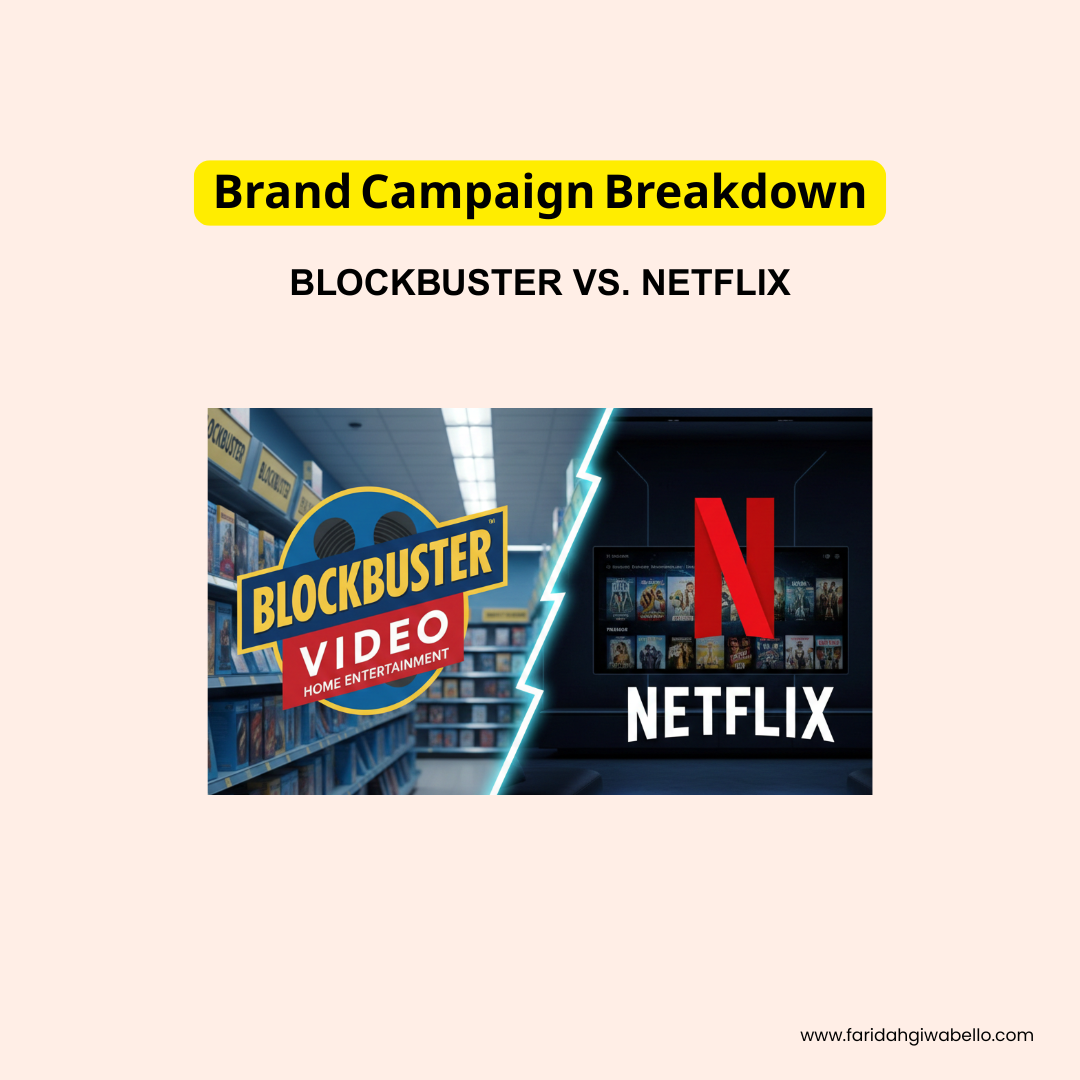
TL;DR
- Blockbuster mistook visibility for loyalty. Being everywhere felt safe. It wasn’t.
- Netflix solved one real problem and earned relevance instead of assuming it.
- Blockbuster led with brand and promises. Netflix led with proof and participation.
Result: Blockbuster disappeared. Netflix became the default.
Why it matters: Being seen doesn’t make you chosen. Relevance does.
📌 Tip: Audit where you’re assuming attention instead of earning it using the VISIBLE framework.
Background
In the early 2000s, Blockbuster dominated the video rental industry with over 9,000 stores worldwide and a brand name synonymous with movie night. Netflix was a scrappy DVD-by-mail startup that most people had never heard of. Twenty years later, Blockbuster was bankrupt, and Netflix was worth over $150 billion.
This wasn’t a story of better technology or deeper pockets. It was a textbook visibility gap: Blockbuster assumed their physical presence equaled customer loyalty. Netflix earned attention by solving the actual problem customers cared about.
Blockbuster had all the visibility. Netflix earned all the relevance.
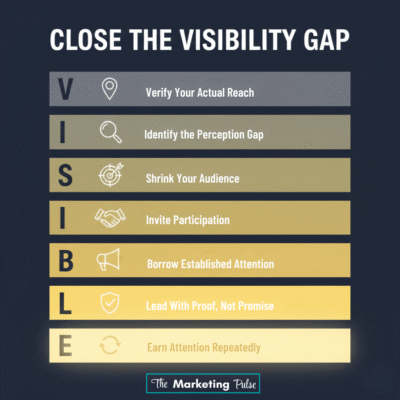
Why It Failed (Using the VISIBLE Framework)
-
V – Failed to Verify Their Actual Reach
Blockbuster looked at their 9,000 stores and assumed they had customer loyalty. They confused physical presence with emotional connection. Yes, people came to their stores, but only because there was no alternative. The data they tracked (store traffic, rentals per location) told them they were winning. But they never verified what mattered: customer satisfaction. They didn’t measure frustration with late fees, disappointment when movies were out of stock, or inconvenience of driving to a store only to find it closed. They assumed visibility in strip malls meant they were reaching customers. They weren’t.
-
I – Ignored the Perception Gap
Blockbuster thought customers saw them as “the movie experts” with the best selection and personal service. Customers saw them as “the company that charges me $5 because I returned a DVD on Monday instead of Sunday.” The gap between how Blockbuster perceived their brand (entertainment destination) and how customers perceived them (necessary evil with punitive fees) was massive. When Netflix offered to partner in 2000, Blockbuster dismissed them because they couldn’t see past their own perception. They believed their brand equity would protect them. It didn’t.
-
S – Failed to Shrink Their Audience
Blockbuster tried to serve everyone: families, film buffs, casual renters, gamers, bargain hunters. Their stores carried everything from new releases to obscure titles to video games. This sprawl meant they were mediocre at everything and excellent at nothing. Netflix started narrow: DVD-by-mail for people who hated late fees and wanted convenience. One clear audience with one clear pain point. While Blockbuster optimized for “everyone who rents movies,” Netflix optimized for “people tired of being punished for being late.” Specificity won.
-
I – Never Invited Participation
Blockbuster’s model was transactional: you drive to the store, rent a movie, return it on time, or pay a fee. There was no community, no conversation, no reason to engage beyond the transaction. Netflix built participation into their model from day one. Their queue system let customers curate their own experience. Their recommendation algorithm learned from your choices. Their rating system turned watching movies into a collaborative act. Later, their social features let you see what friends were watching. Blockbuster had customers. Netflix had participants.
-
B – Couldn’t Borrow Established Attention
Blockbuster relied entirely on their own brand. When streaming emerged, they had no partnerships, no integrations, no collaborative strategies. Netflix borrowed attention brilliantly. They partnered with DVD players and gaming consoles to embed their app. They collaborated with ISPs to ensure smooth streaming. They worked with content creators to build exclusive libraries. Blockbuster’s arrogance (“we’re already the biggest”) meant they never sought to borrow credibility or distribution from others. Netflix understood they didn’t need to own attention, they just needed access to it.
-
L – Led With Promise, Not Proof
Blockbuster’s pitch was always aspirational: “Make it a Blockbuster night!” But the experience rarely lived up to the promise. New releases were out of stock. Late fees were inevitable. The “Blockbuster experience” was disappointing more often than magical. Netflix led with proof: “No late fees. No due dates. Movies delivered to your door.” These weren’t promises. They were facts. You could verify them immediately. When Netflix said their recommendation engine would help you find movies you’d love, you could test it yourself. Proof beats promise every time.
-
E – Failed to Earn Attention Repeatedly
Blockbuster assumed their legacy and market dominance meant they’d always have attention. They treated visibility as a permanent asset, not something that needed to be earned continuously. When customer preferences shifted, Blockbuster didn’t adapt, they defended. They launched Total Access (mail service) in 2004, four years after Netflix proved the model worked. They launched streaming in 2008, a year after Netflix. Every move was reactive, late, and half-hearted. Netflix earned attention repeatedly by consistently solving problems better: first with mail, then streaming, then original content, then global expansion. They never assumed yesterday’s visibility would carry tomorrow.
Why Netflix Won
Netflix didn’t have Blockbuster’s visibility, brand recognition, or physical footprint. What they had was a systematic approach to earning attention:
- They verified where customers actually were (at home, tired of driving to stores).
- They closed the perception gap (we’re the anti-late-fee company).
- They shrank their audience (people who value convenience over browsing).
- They invited participation (rate movies, build your queue, shape recommendations).
- They borrowed attention (partnerships with device makers).
- They led with proof (try it, no late fees, cancel anytime).
- They earned attention repeatedly (mail, streaming, originals, global).
Blockbuster had the visibility. Netflix earned the relevance.
The Lesson
Visibility without relevance is just noise. You can be seen everywhere and matter nowhere. Blockbuster assumed their physical presence, brand legacy, and market dominance meant customers would stay. Netflix proved that solving the actual problem earns more attention than any amount of assumed loyalty.
The visibility gap isn’t about being seen. It’s about being valued. And value isn’t assumed. It’s earned.
Unlike Blockbuster, the VISIBLE framework let’s you know where you stand.
Next Steps
- Sign up for The Marketing Pulse for real-world strategy insights, examples, and execution-ready takeaways.